Section 1: Product and Company Identification [ Return to Top ]
COMPANY:
Venture Products Inc.
238 E. Water St.
Orrville, Ohio 44667
Telephone:
CHEMTREC - Spill Emergency Only 1-800-424-9300
INTERNATIONAL 703-527-3887 (Collect calls accepted)
Information: 330-682-0075
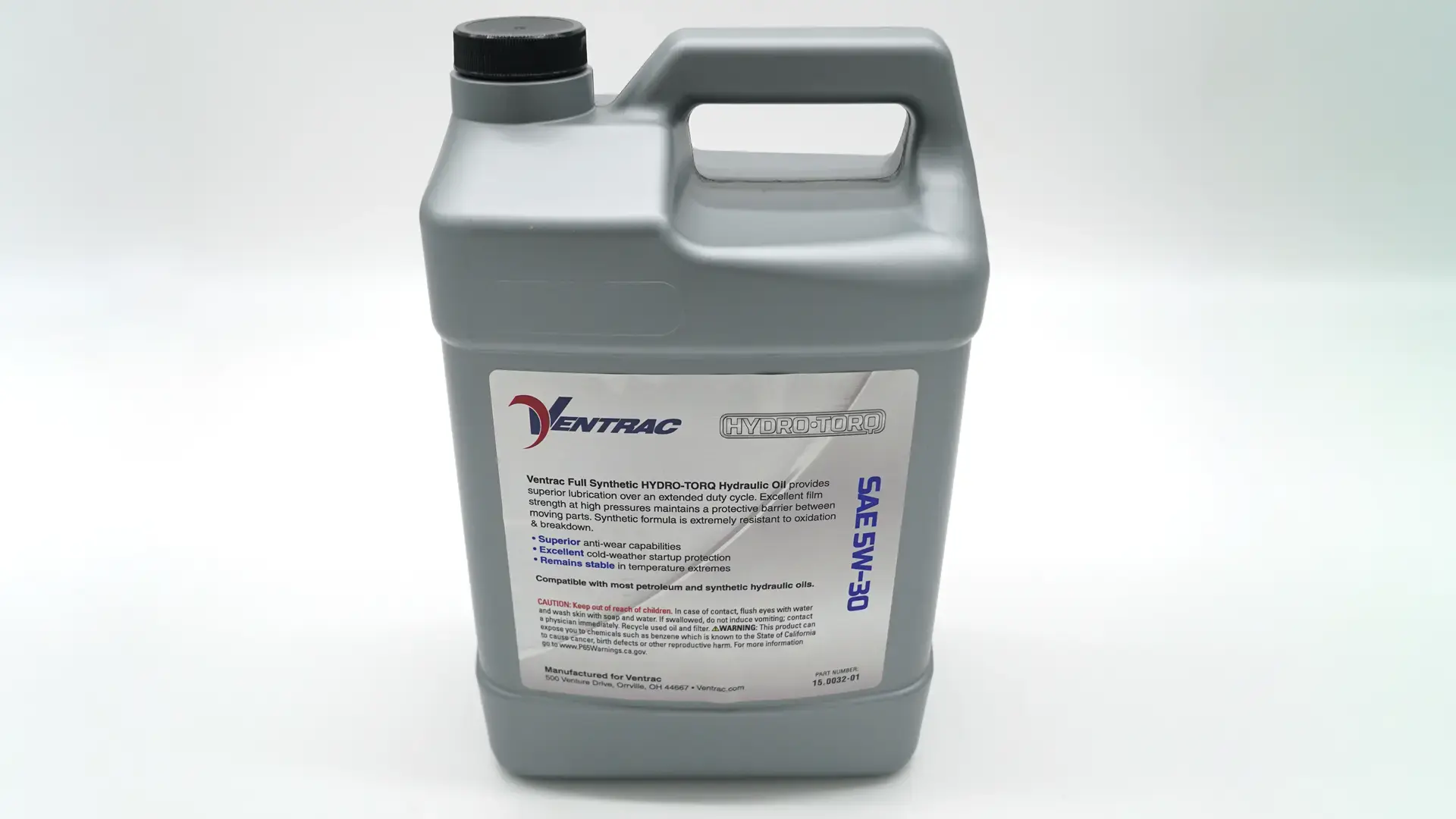
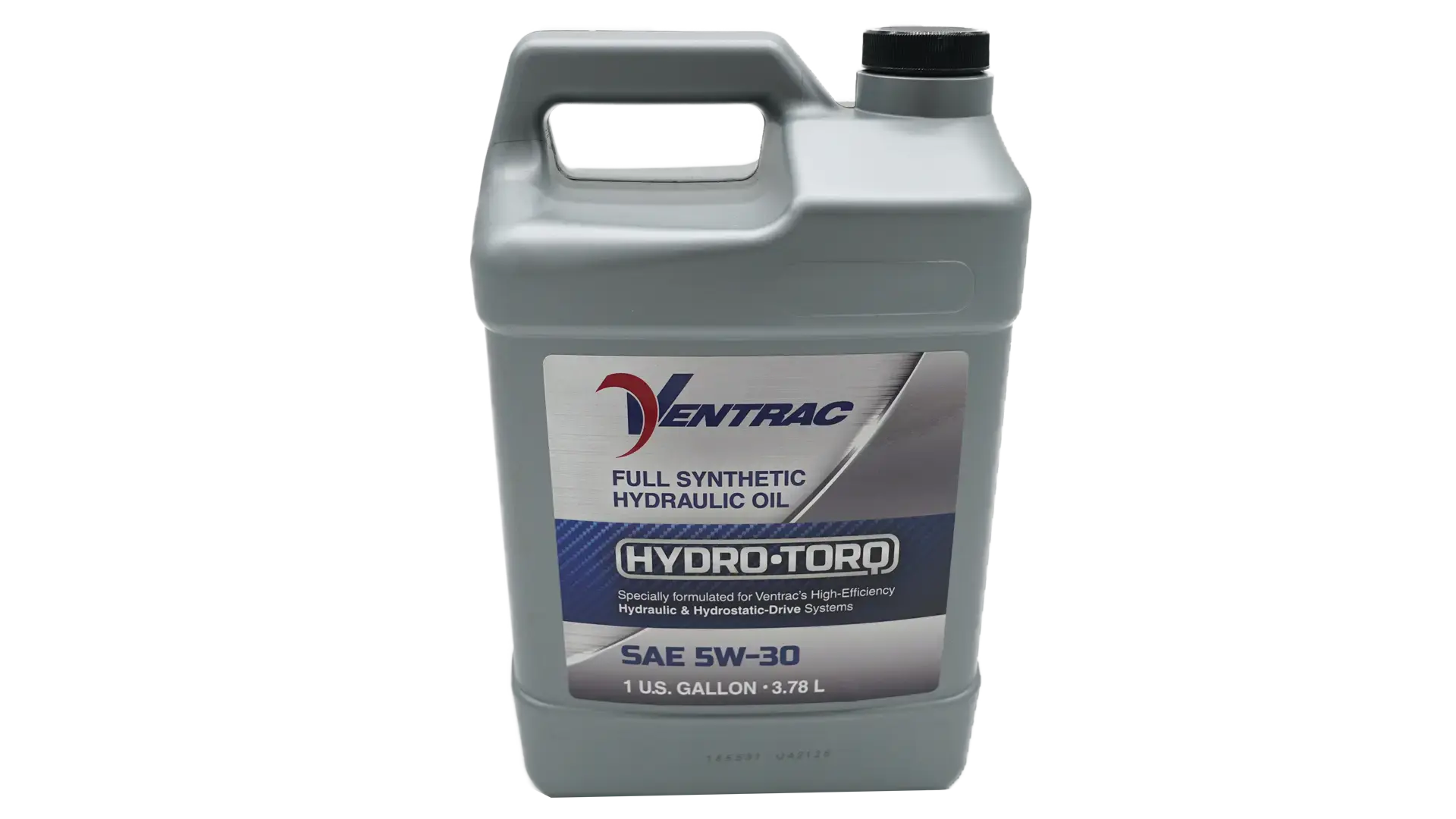
VENTRAC Product Code: 15.0032, 15.0032-01, 15.0032-05, 15.0032-55
Product Label Name: Hydro-Torq XL Synthetic Hydraulic Oil SAE 5W-30
Product Use: Lubricating Fluid
Section 2:Composition/Information on Ingredients [ Return to Top ]
OSHA HAZARDOUS COMPONENTS (29 CFR 1910.1200)
This product is not formulated to contain ingredients that have exposure limits exceeding those established by US agencies
* See Section 8 for exposure limits.
Section 3: Hazards Identification [ Return to Top ]
POTENTIAL HEALTH EFFECTS: Minor eye, inhalation and skin irritant.
* See Section 11 for toxicological information.
Section 4: First Aid Measures [ Return to Top ]
EYE: Flush with water for 15-20 minutes. Seek medical attention if irritation develops.
SKIN: Wash immediately with soap and water. Remove contaminated clothing and launder before reuse. Discard shoes and leather articles saturated with the product. Obtain medical advice if irritation occurs.
INHALATION: Remove exposed person to fresh air. If breathing is labored give oxygen.If breathing has stopped apply artificial respiration. Get immediate medical attention.
INGESTION: DO NOT INDUCE VOMITING. If conscious, give 2 glasses of water. If vomiting does occur, keep head below hips to reduce risk of aspiration. Get immediate medical attention.
Section 5: Fire Fighting Measures [ Return to Top ]
| FLAMMABILITY PROPERTIES: | |
|---|---|
| Flash Point | 468°F (242°C) |
| Method | COC ASTM D-92 |
| LFL/UFL | Not Determined |
| Auto-ignition Temperature | Not Determined |
EXTINGUISHING MEDIA: Carbon dioxide, dry chemical, and alcohol foam.
FIREFIGHTING EQUIPMENT: Full bunker gear recommended including a positive pressure self-contained breathing apparatus.
Section 6: Accidental Release Measures [ Return to Top ]
Isolate spill area. Provide adequate ventilation. Wear appropriate personal protection. Recover free product for recycle and/or disposal. Add sand, earth or other suitable absorbent to spill area. Prevent entry into sewers and waterways. Check under Transportation and Labeling (DOT/CERCLA) and Other Regulator Information Section (SARA) for hazardous substances to determine regulatory reporting requirements for spill.
Section 7: Handling and Storage [ Return to Top ]
HANDLING: Keep containers closed. Avoid contact with eyes, skin or clothing. Wash hands after handling. Empty container may retain product residue which may exhibit hazards of product.
STORAGE: Keep away from heat or flame.
Section 8: Exposure Controls/Personal Protection [ Return to Top ]
VENTILATION: Use adequate general or local exhaust ventilation to keep airborne concentrations below exposure limits.
RESPIRATORY: Use a NIOSH approved respirator when necessary.
SKIN: Use Viton or Nitrile gloves to avoid prolongedor repeated skin contact.
EYE: Use splash goggles or face shield where splashing is expected or can occur.
EXPOSURE LIMITS: The Threshold Limit Value (TLV) of 5 mg/m3 is suggested for oil mist.
Section 9: Physical and Chemical Properties [ Return to Top ]
| Physical State | Liquid |
| Boiling Point | Not Determined |
| Freezing/Melting Point | -47°F(-44°C) |
| Vapor Pressure | Not Determined |
| Vapor Density (Air=1) | Negligible |
| Evaporation Rate | Not Determined |
| Solubility in Water | Negligible |
| Specific Gravity (Water=1) | 0.8534 |
| Density, lb./gal. | 7.106 |
| Volatility (Volume) | Negligible |
| VOC | Unknown |
| pH | Essentially Neutral |
| Coefficient of Water/Oil Distribution | Not Determined |
| Odor | Mild, Bland, Hydrocarbon Odor |
| Odor Threshold | Not Determined |
| Appearance | Light Straw Transparent Fluid |
| Viscosity, cSt @ 100°C | 10.03 |
| Viscosity, cSt @ 40°C | 58.21 |
| Viscosity Index | 160 |
Section 10: Stability and Reactivity [ Return to Top ]
STABILITY: Stable under moderately elevated temperatures and pressures.
INCOMPATIBILITY: Avoid contact with strong oxidants.
HAZARDOUS POLYMERIZATION: Will not occur.
HAZARDOUS DECOMPOSITION OF PRODUCT: Toxic oxides of carbon, aldehydes and other products of incomplete combustion.
Section 11: Toxicological Information [ Return to Top ]
ACUTE EXPOSURE
Eye Irritation: Moderate to strong eye irritation. Based on data from components or similar material.
Skin Irritation: Not expected to be a primary skin irritant. Based on data from components or similar material. Prolonged or repeated skin contact as from clothing wet with material may cause dermatitis. Symptoms may include redness, edema, drying, defatting, and cracking of the skin.
Respiratory Irritation: If material is misted or if vapors are generated from heating, exposure may cause irritation of mucous membranes and the upper respiratory tract similar to that observed with mineral oil. Based on data from components or similar materials. Under good industrial hygiene practices where all exposure limits are observed, respiratory irritation should not be a problem.
CHRONIC EXPOSURE
Chronic Toxicity: No data available to indicate product present at greater than 1.0% are chronic health hazards.
Carcinogenicity: No data available to indicate product present at greater than 0.1% are a carcinogenic hazard.
Mutagenicity: No data available to indicate product present at greater than 1.0% present a mutagenic or genotoxic hazard.
Reproductive Toxicity: No data available to indicate product present at greater than 1.0% present a reproductive hazard.
Teratogenicity: No data available to indicate product present at greater than 1.0% present a teratogenic hazards.
ADDITIONAL INFORMATION
Exposure Limits: Under conditions which may generate mists, observe the OSHA PEL of 5 mg per cubic meter.
Section 12: Ecological Information [ Return to Top ]
No data available on the adverse effects of this product on the environment.
Section 13: Disposal Considerations [ Return to Top ]
If this product as supplied becomes a waste, it does not meet the criteria of a hazardous waste as defined under the Resource Conservation and Recovery Act (RCRA) 40 CFR 261.
Section 14: Transport Information [ Return to Top ]
This product is not classified as hazardous material for DOT shipping. For further information relative to spills resulting from transportation incidents, refer to the latest DOT Emergency Response Guidebook for Hazardous Materials.
Section 15: Regulatory Information [ Return to Top ]
U.S. Federal Regulations |
|||
|---|---|---|---|
| OSHA Table Z | Synthetic Base Stock (mist) | ||
| TSCA | Not Applicable | ||
| CERCLA 40 CFR 302.4 | Not Applicable | ||
| Auto-ignition Temperature | Not Applicable | ||
| SARA Title III | |||
| Section 302 Extremely Hazardous | Not Applicable | ||
| Section 311/312 | |||
| Fire Hazard | Yes | ||
| Reactive Hazard | No | ||
| Release of Pressure | No | ||
| Acute Health Hazard | Yes | ||
| Chronic Health Hazard | No | ||
| Section 313 Toxic Chemical | Not Applicable | ||
U.S. State Regulations
California (Prop 65): Does not contain chemicals known to the state of California to cause cancer.
International Regulations
WHMIS: All components listed
Section 16: Other Information [ Return to Top ]
The information and recommendations contained herein are, to the best of our knowledge and belief, accurate and reliable as of the date issued. We makes no warranty or guarantee, expressed or implied, of their accuracy or reliability, and we shall not be liable for any loss or damage based upon the criteria supplied by the developers of these rating systems, together with our interpretation of the available data.